Today

Fasting Rules

Meat not allowed Meat Abstain
Fish not allowed Fish Abstain
Dairy not allowed Dairy Abstain
Oil allowed Oil Allowed
Wine allowed Wine Allowed

☦ Saints & Commemorations

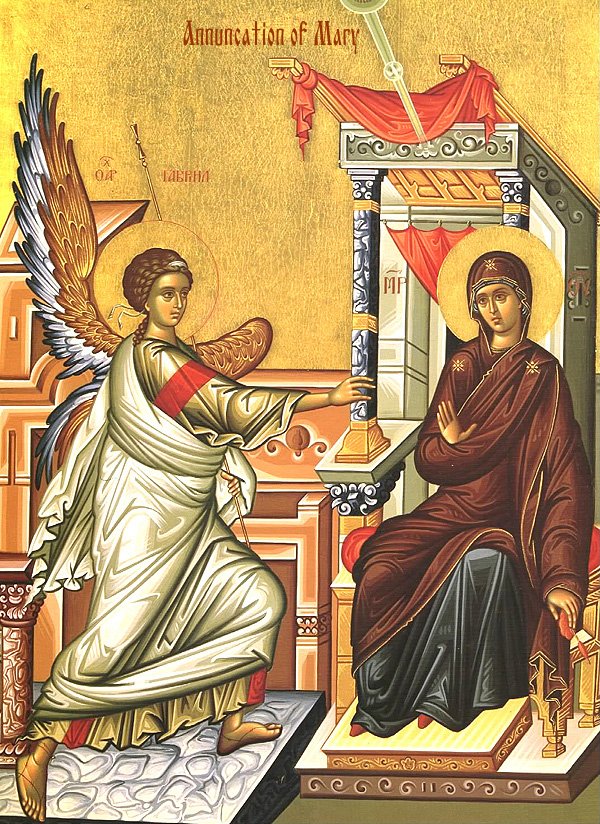
Forefeast of Annunciation

Forefeast of Annunciation

The Feast of the Annunciation to the Most Holy Theotokos is celebrated on one day March 25, exactly nine months before the Nativity of Christ. There is one day of Prefeast (March 24), followed by the Feast itself. On March 26, we celebrate the Synaxis of the Archangel Gabriel. Because the Feast of the Annunciation falls during Great Lent, there is no Postfeast of the Feast.

Troparion - Tone 4

Today the beginning of universal joy moves us to sing the prefestal hymn; / for Gabriel is coming and will cry to her: / "Rejoice, O Virgin full of grace, the Lord is with you.

Kontakion - Tone 4

(Greek) At the great Archangel’s voice, O Theotokos, / the All-holy Spirit came upon thee / and thou didst conceive Him Who is one in essence and co-enthroned with God the Father, / O you who are the recall of Adam.

Ven. Zachariah the Recluse

Saint Zachariah the Recluse of Egypt because of his concern for the poor and homeless was called “to the outcast.” In the printed Menaion he is known as “our Monastic Father Zachariah,” and so he has been identified erroneously with Saint Zachariah the Monk.

Troparion - Tone 8

By a flood of tears you made the desert fertile, / and your longing for God brought forth fruits in abundance. / By the radiance of miracles you illumined the whole universe! / O our holy father Zachariah, pray to Christ our God to save our souls!

Saint Zacharias the Recluse of Egypt (4th c.)
His father, Carion the Egyptian, forsook his family to become a monk, taking Zacharias with him. Though very young, Zacharias manifested gifts of grace rarely seen among the elders of Sketis. Abba Moses once asked him, ‘What does it mean to be a monk?’, to which Zacharias replied by taking off his hat and treading it underfoot, saying ‘If a man be not s His father, Carion the Egyptian, forsook his family to become a monk, taking Zacharias with him. Though very young, Zacharias manifested gifts of grace rarely seen among the elders of Sketis. Abba Moses once asked him, ‘What does it mean to be a monk?’, to which Zacharias replied by taking off his hat and treading it underfoot, saying ‘If a man be not so broken, he cannot be a monk.’ After shining as a great light among the holy monks of Scetis, he reposed at a young age.
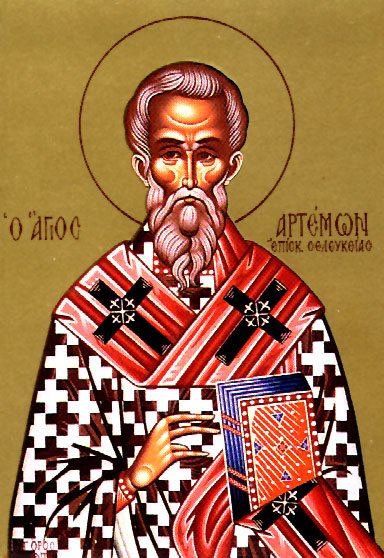
Righteous Artemon, Bishop of Seleucia

Righteous Artemon, Bishop of Seleucia

Saint Artemon, Bishop of Seleucia, was born and lived in Seleucia of Pisidia (Asia Minor). He was pious and virtuous, therefore when the holy Apostle Paul (June 29) came to Seleucia, he established Saint Artemon as the first bishop of this city, since he was the most worthy. Saint Artemon wisely nourished the flock entrusted to him and won glory as a comforter of the poor and oppressed. Saint Artemon, Bishop of Seleucia, was born and lived in Seleucia of Pisidia (Asia Minor). He was pious and virtuous, therefore when the holy Apostle Paul (June 29) came to Seleucia, he established Saint Artemon as the first bishop of this city, since he was the most worthy. Saint Artemon wisely nourished the flock entrusted to him and won glory as a comforter of the poor and oppressed. Saint Artemon died in great old age. [In the ancient Slavonic Lives of the Saints “Seleucian” was written as “Seleoukinian” or “Seleunian.” However, in several of the Greek memorials the bishop was also called Solunian (i.e., of Thessalonica). Saint Artemon (or Menignus) was listed in the MENAIA as Seleucian or Solunian. In the second half of the eighteenth century, these two names were mistakenly applied to various persons.]

Troparion - Tone 4

In truth you were revealed to your flock as a rule of faith, / an image of humility and a teacher of abstinence; / your humility exalted you; / your poverty enriched you. / Hierarch Father Artemon, / entreat Christ our God / that our souls may be saved.

Commemoration of the Miracle at the Monastery of the Caves in Kiev (?)

“Two friends, John and Sergius, swore brotherhood before the icon of the holy Mother of God in this monastery. John was a rich man, with a five-year-old son, Zachariah. John fell ill, and at his death commended his son to the care of Sergius, and left in Sergius’ keeping a large sum of silver and gold for him to hand over to Zachariah when he had grown up. Whe “Two friends, John and Sergius, swore brotherhood before the icon of the holy Mother of God in this monastery. John was a rich man, with a five-year-old son, Zachariah. John fell ill, and at his death commended his son to the care of Sergius, and left in Sergius’ keeping a large sum of silver and gold for him to hand over to Zachariah when he had grown up. When Zachariah came of age, however, Sergius denied receiving anything from the deceased John. Then Zachariah said: ‘Let him swear before the same icon of the most holy Mother of God, in front of which he accepted brotherhood with my late father, that he received nothing from John, and then I will seek nothing more from him.’ Sergius agreed, but when he had sworn this and went up to kiss the icon, some force held him back and would not allow him to come near. Then, tormented all at once by a demon, he began to cry out: ‘Holy fathers Antony and Theodosius, do not let this merciless angel destroy me!’ The demon had attacked him by God’s permission. He then told them of all the money which John had left. But when they opened the box, they found double the amount. Taking it, Zachariah gave it to the monastery and was himself tonsured as a monk. He lived a long time and was worthy of God’s great gifts, entering peacefully into eternity.” (Prologue)

Scripture Readings

View scripture readings for this date on OCA.org.

View readings on OCA.org

Notes

["Presanctified Liturgy"]

Liturgical data sourced from OCA.org and orthocal.info