Today

Fasting Rules

Meat not allowed Meat Abstain
Fish not allowed Fish Abstain
Dairy not allowed Dairy Abstain
Oil allowed Oil Allowed
Wine allowed Wine Allowed

☦ Saints & Commemorations

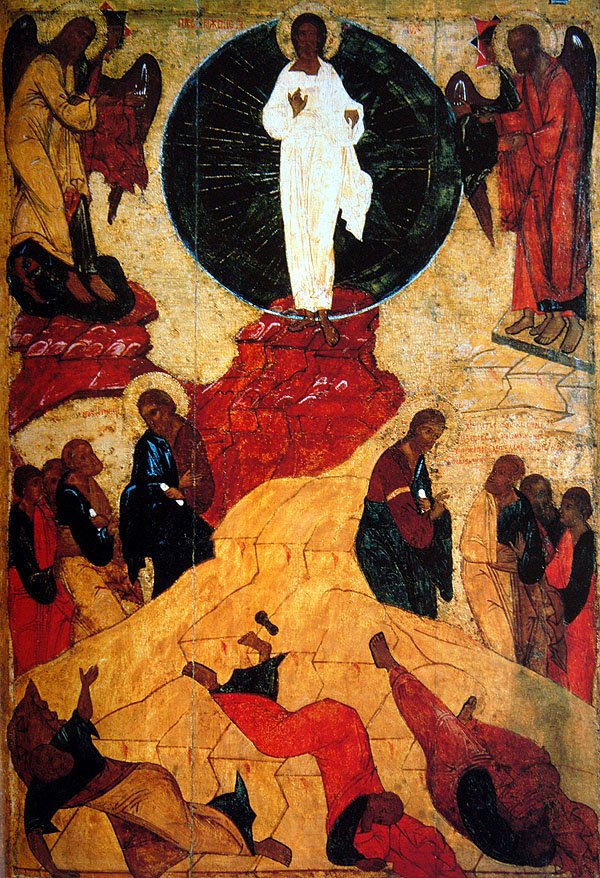
Afterfeast of the Transfiguration

Afterfeast of the Transfiguration

On the first day of the Afterfeast of the Transfiguration, the hymns of Vespers speak of the amazement of the Apostles when they saw Christ transfigured before them. The Savior’s equality with the Father is also stressed, for He who covers Himself with light as with a garment is now transfigured before His disciples, “shining more brightly than the sun.”

Troparion - Tone 7

You were transfigured on the mountain, O Christ God, / revealing Your glory to Your disciples as far as they could bear it. / Let Your everlasting Light also shine upon us sinners, / through the prayers of the Theotokos. / O Giver of Light, glory to You!

Kontakion - Tone 7

On the Mountain You were Transfigured, O Christ God, / and Your disciples beheld Your glory as far as they could see it; / so that when they would behold You crucified, / they would understand that Your suffering was voluntary, / and would proclaim to the world, / that You are truly the Radiance of the Father!
Martyr Dometius of Persia

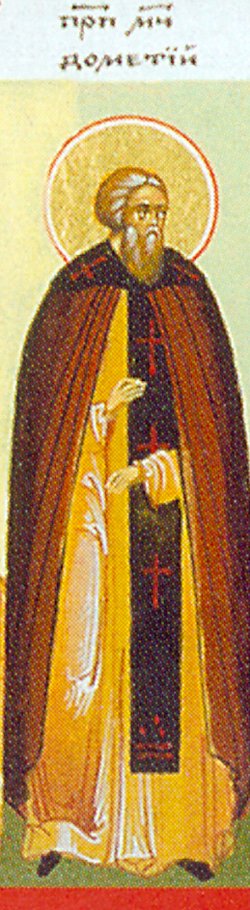
Martyr Dometius of Persia

Saint Dometius lived in Persia during the fourth century. In his youth he was converted to the Faith by a Christian named Uaros. Forsaking Persia, he withdrew to the frontier city of Nisibis (in Mesopotamia), where he was baptized in one of the monasteries, and also received the monastic tonsure. Fleeing the ill-will of some of the monks, Saint Dometius moved to the monastery of Saints Sergius and Bacchus in the city of Theodosiopolis. Saint Dometius lived in Persia during the fourth century. In his youth he was converted to the Faith by a Christian named Uaros. Forsaking Persia, he withdrew to the frontier city of Nisibis (in Mesopotamia), where he was baptized in one of the monasteries, and also received the monastic tonsure. Fleeing the ill-will of some of the monks, Saint Dometius moved to the monastery of Saints Sergius and Bacchus in the city of Theodosiopolis. The monastery was under the guidance of an archimandrite named Urbelos, a strict ascetic, of whom it was said that for sixty years he did not taste cooked food, nor did he lay down for sleep, but rather took his rest standing up, supporting himself upon his staff. In this monastery Saint Dometius was ordained a deacon, but when the archimandrite decided to have him made a presbyter, the saint, considering himself unworthy, hid himself on a desolate mountain in Syria, in the region of Cyrrhus. Stories about him constantly spread among the local inhabitants. They began to come to him for healing and for help. Many pagans were brought to faith in Christ by Dometius. And one time, in the locality where Saint Dometius struggled with his disciples, the emperor Julian the Apostate (361-363) arrived, traveling on his campaign against the Persians. By order of the emperor, soldiers found Saint Dometius praying with his disciples in a cave, and walled them up alive inside.

Troparion - Tone 4

Preparing yourself through prayer and fasting on the mountain, / you destroyed the hosts of spiritual enemies with the weapon of the Cross. / And then courageously preparing yourself for martyrdom, / you were crowned by God for both your life and death, / O ever-memorable venerable martyr Dometius.

Kontakion - Tone 6

Despising corruption and degrading philosophies, / O venerable martyr Dometius, / you became a great guide of monks. / You did not fear the wrath of the king, / who did not wish to honor Christ the true God. / Therefore in death You did raise the hymn: / God is with me, and no one will be against me.

Our Holy Father Nicanorus the Wonderworker
Theodosius the New

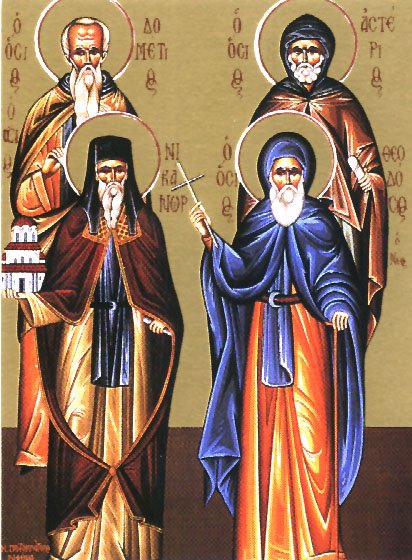
Theodosius the New

No information available at this time.

Troparion - Tone 8

By a flood of tears you made the desert fertile, / and your longing for God brought forth fruits in abundance. / By the radiance of miracles you illumined the whole universe! / O our holy father Theodosius, pray to Christ our God to save our souls!

Narcissus the Hieromartyr of Jerusalem

Saint Narcissus (Nárcissus) was the thirtieth (or thirty-first) Bishop of Jerusalem after Saint James the Brother of the Lord (October 23). He was a temperate, philanthropic, instructive, and uncompromising man in the performance of his duties, without being hindered by his enemies. The Church historian Eusebius describes two miraculous events (History of the Church, Book 6, 9.8). Saint Narcissus (Nárcissus) was the thirtieth (or thirty-first) Bishop of Jerusalem after Saint James the Brother of the Lord (October 23). He was a temperate, philanthropic, instructive, and uncompromising man in the performance of his duties, without being hindered by his enemies. The Church historian Eusebius describes two miraculous events (History of the Church, Book 6, 9.8). On the night of Pascha, the lamps of the church ran out of oil, and the entire congregation was distressed by this. Saint Narcissus told the deacons to bring him water. After praying over the water, the Bishop instructed them to pour the water into the lamps, and to trust in the Lord. They obeyed him without question, and found that the water had been turned into oil. Many of those present kept some of the oil in remembrance of this miracle. Although most of his flock loved their Archpastor, the Saint's energy and conscientiousness as a bishop disturbed some who were not as attentive to their own duties. Knowing that they were guilty of many transgressions, they feared that these might be discovered, and that they would be punished. To avoid this, they brought various accusations against the Hierarch. In order to convince people that they spoke the truth, they swore oaths. The first said, 'If this is not true, may I be burnt to death." Another said, "May my body be wasted by leprosy." A third said, "May I lose my sight." None of the faithful believed these malicious lies, for they knew of the Saint's character and integrity. The blameless one, however, was so distressed by their contemptible allegations, that he went to a remote desert, remaining there for several years. It was not long before the Lord justified His faithful servant and punished those false witnesses as they deserved. The first perjurer's house caught fire during the night from a small spark which landed on the roof. That man and his family were were burnt to ashes. The second was stricken by the very disease that he had named, and so his entire body, from head to toe, was ravaged by it. Seeing what had happened to the others, and realizing that he could not escape God's judgment, the third prevaricator publicly confessed his part in the intrigue. He exhausted himself with lamentations and a flood of tears, so much so that he lost the sight in both eyes. This was the price these evil men paid for their lies. So that the Church of Jerusalem would not remain without an Archpastor, the neighboring bishops of the province, appointed Pius, and then Germanion, who reposed after a short time, and was succeeded by Gordius. While the latter occupied the See, Saint Narcissus appeared again like one from the dead. All the faithful rejoiced at his return, and after he was vindicated, they begged him to resume his office. He agreed, but later, due to his advanced age, he made Saint Alexander (May 16) his vicar. Thus, Saint Narcissus ascended the throne twice, serving as Bishop of Jerusalem for a total of 26 years. He reposed peacefully at the age of 116. This Saint Narcissus should not be confused with Saint Narcissus of the 70, Bishop of Athens (October 31).

Troparion - Tone 4

The truth of things revealed you to your flock as a rule of faith, / a model of meekness, and a teacher of temperance. / Therefore, through humility, you attained the heights; / and through poverty, riches. / O Hierarch Nárcissus our Father, entreat Christ God that our souls may be saved.

Kontakion - Tone 2

O Hierarch Nárcissus, / divine thunder, spiritual trumpet, / planter of faith, and pruner of heresies, / great favorite of the Trinity, / standing before God with the Angels, / pray unceasingly for all of us.

Holy Martyrs Marinus the Soldier and Asterius the Senator (260)

Marinus was a soldier in the Roman army, serving in Caesarea in Palestine. During a persecution under the Emperor Gallienus, he was arrested and beheaded for his Christian faith. The senator Asterius, also a Christian, was present at his execution. Asterius took off his senatorial toga, wrapped the martyr’s body in it, and carried the holy body away to bury it. For this he too was beheaded.

Our Holy Father Or (Horus) of the Thebaid (390)
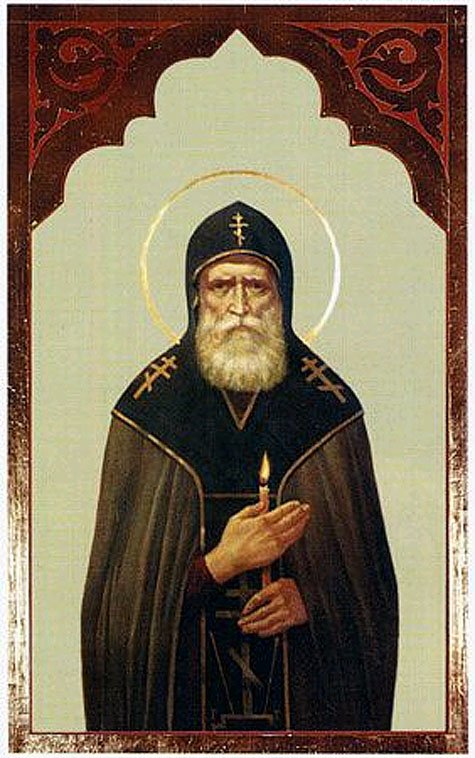
He was a native of Egypt; his name is that of one of the Egyptian gods. He fled to the desert to live as a hermit, but after many years he became a well-known spiritual guide and founded several monastic communities. A first-hand account of him, by Rufinus, says ‘In appearance he is like an angel of God; an old man of ninety with a long snow-white beard. T He was a native of Egypt; his name is that of one of the Egyptian gods. He fled to the desert to live as a hermit, but after many years he became a well-known spiritual guide and founded several monastic communities. A first-hand account of him, by Rufinus, says ‘In appearance he is like an angel of God; an old man of ninety with a long snow-white beard. The impression left by his presence is delightful. His gaze is imbued with more-than-human radiance.’ He received communion every day. So detached was he from the world that his disciples once had to remind him that Pascha had come. Hearing this, he went outside, raised his hands to heaven and prayed without ceasing for three days. When he had done he said to his disciples ‘This is the monk’s celebration of Pascha: the lifting up of the mind to unity with God.’ He reposed in peace at a great age.
Our Holy Father Pimen the Much-Ailing (1110)

Our Holy Father Pimen the Much-Ailing (1110)

Saint Pimen the Much-ailing attained the Kingdom of Heaven by enduring grievous illness. This Russian ascetic was both born and grew up sickly, but his illness preserved him from illness of the soul. For a long time he besought his parents to send him to the Kiev Caves monastery. When they brought their son to the famed monastery, they then began to pray for him to be healthy. Saint Pimen the Much-ailing attained the Kingdom of Heaven by enduring grievous illness. This Russian ascetic was both born and grew up sickly, but his illness preserved him from illness of the soul. For a long time he besought his parents to send him to the Kiev Caves monastery. When they brought their son to the famed monastery, they then began to pray for him to be healthy. But the sufferer himself, conscious of the high value of suffering, instead asked the Lord both for the continuation of his sickness, and also his tonsuring into monasticism. One night, radiant angels appeared in the guise of monks, and tonsured him. They told him that he would receive his health only on the day of his death. Several of the brethren heard the sound of singing, and coming to Saint Pimen, they found him attired in monastic garb. In his hand he held a lit candle, and his tonsured hair could be seen at the crypt of Saint Theodosius. Saint Pimen spent many years in sickness, so that those attending to him could not tolerate it. They often left him without food and water for two or three days at a time, but he endured everything with joy. Compassionate towards the brethren, Saint Pimen healed a certain crippled brother, who promised to serve him until death if he were healed. But after a while the brother grew lax in his service, and his former ailment overtook him. Saint Pimen again healed him with the advice, that both the sick and those attending the sick receive equal reward. Saint Pimen spent twenty years in grievous sufferings. One day, as the angels had predicted, he became healthy. In church, the monk took leave of all the brethren and partook of the Holy Mysteries. Then, having bowed down before the grave of Abba Anthony, Saint Pimen indicated the place for his burial, and he himself carried his bed there. Pointing to those buried there, one after the other of the monks, he predicted that the brethren would find one buried in the schema to be without it, since this monk had led a life unworthy of it. Another monk, who had been buried without the schema, would be found clothed in it after death, since he had greatly desired it during his life, and he was worthy. Then Saint Pimen lay down upon his bed and fell asleep in the Lord. The brethren buried him with great honor, glorifying God. After the death of Saint Pimen, the brethren were persuaded of the truth of his words. On the day of Saint Pimen’s repose, three fiery columns appeared over the trapeza, and moved atop the church. A similar event was described in the chronicles under February 11, 1110 (See the August 5 commemoration of Saint Theoctistus of Chernigov), therefore the day of demise of Saint Pimen is surmised as also occurring on February 11, 1110. The relics of Saint Pimen rest in the Antoniev Cave. A second commemoration of the saint is made on September 28, the Synaxis of the Monks of the Near Caves.

Troparion - Tone 8

By a flood of tears you made the desert fertile, / and your longing for God brought forth fruits in abundance. / By the radiance of miracles you illumined the whole universe! / O our holy father Pimen, pray to Christ our God to save our souls!

Scripture Readings

☩Epistle

Romans 12:1-3

1 I beseech you therefore, brethren, by the mercies of God, that ye present your bodies a living sacrifice, holy, acceptable unto God, which is your reasonable service.
2 And be not conformed to this world: but be ye transformed by the renewing of your mind, that ye may prove what is that good, and acceptable, and perfect, will of God.
3 For I say, through the grace given unto me, to every man that is among you, not to think of himself more highly than he ought to think; but to think soberly, according as God hath dealt to every man the measure of faith.

☩Gospel

Matthew 10:37-11:1

37 He that loveth father or mother more than me is not worthy of me: and he that loveth son or daughter more than me is not worthy of me.
38 And he that taketh not his cross, and followeth after me, is not worthy of me.
39 He that findeth his life shall lose it: and he that loseth his life for my sake shall find it.
40 He that receiveth you receiveth me, and he that receiveth me receiveth him that sent me.
41 He that receiveth a prophet in the name of a prophet shall receive a prophet’s reward; and he that receiveth a righteous man in the name of a righteous man shall receive a righteous man’s reward.
42 And whosoever shall give to drink unto one of these little ones a cup of cold water only in the name of a disciple, verily I say unto you, he shall in no wise lose his reward.
1 And it came to pass, when Jesus had made an end of commanding his twelve disciples, he departed thence to teach and to preach in their cities.

Liturgical data sourced from OCA.org and orthocal.info