
Fasting Rules
 Meat
Allowed
 Fish
Allowed
 Dairy
Allowed
 Oil
Allowed
 Wine
Allowed
Saints & Commemorations
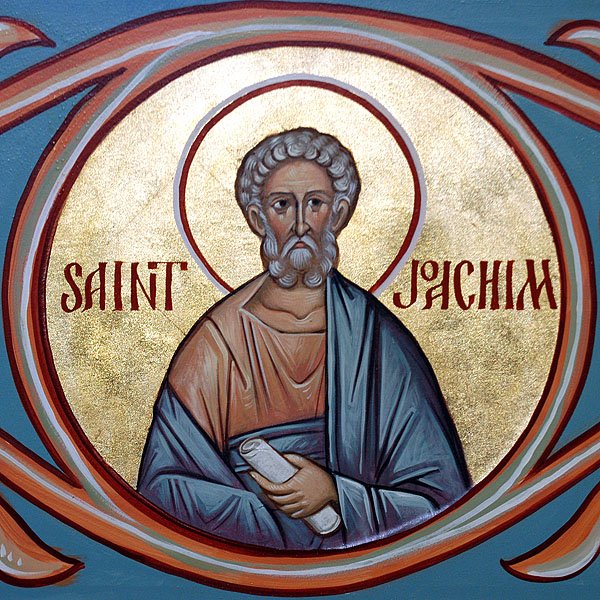
Righteous Joachim and Anna
Saint Joachim, the son of Barpathir, was of the tribe of Judah, and was a descendant of King David, to whom God had revealed that the Savior of the world would be born from his seed. Saint Anna was the daughter of Matthan the priest, who was of the tribe of Levi. Saint Anna’s family came from Bethlehem.
Saint Joachim, the son of Barpathir, was of the tribe of Judah, and was a descendant of King David, to whom God had revealed that the Savior of the world would be born from his seed. Saint Anna was the daughter of Matthan the priest, who was of the tribe of Levi. Saint Anna’s family came from Bethlehem.
The couple lived at Nazareth in Galilee. They were childless into their old age and all their life they grieved over this. They had to endure derision and scorn, since at that time childlessness was considered a disgrace. They never grumbled, but fervently prayed to God, humbly trusting in Him.
Once, during a great feast, the gifts which Joachim took to Jerusalem as an offering to God were not accepted by the priest Reuben, who considered that a childless man was not worthy to offer sacrifice to God. This pained the old man very much, and he, regarding himself the most sinful of people, decided not to return home, but to settle in solitude in a desolate place.
When Saint Anna learned what humiliation her husband had endured, she sorrowfully entreated God with prayer and fasting to grant her a child. In his desolate solitude the righteous Joachim also asked God for this. The prayer of the saintly couple was heard. An angel told them that a daughter would be born to them, Who would be blessed above all other women. He also told them that She would remain a virgin, would be dedicated to the Lord and live in the Temple, and would give birth to the Savior. Obeying the instructions of the heavenly messenger, Saints Joachim and Anna met at the Golden Gate in Jerusalem. Then, as God promised, a daughter was born to them and they named her Mary.
Saint Joachim died a few years later at the age of 80, after his daughter went to live in the Temple. Saint Anna died at the age of 70, two years after her husband.
Saints Joachim and Anna are often invoked by couples trying to have children.
Troparion - Tone 1
Since you were righteous under the law of grace, O Joachim and Anna, / you gave birth to the God-given infant for our sake. / Therefore, the divine Church radiantly keeps feast today, / joyfully celebrating your honorable memory and giving glory to God / who has raised up a horn of salvation from the house of David.
Kontakion - Tone 2
Anna is now no longer barren / and nurses the All-Pure One! / She rejoices and calls us all to sing a hymn of praise to Christ, / she who from her womb gave mankind the only ever Virgin Mother.
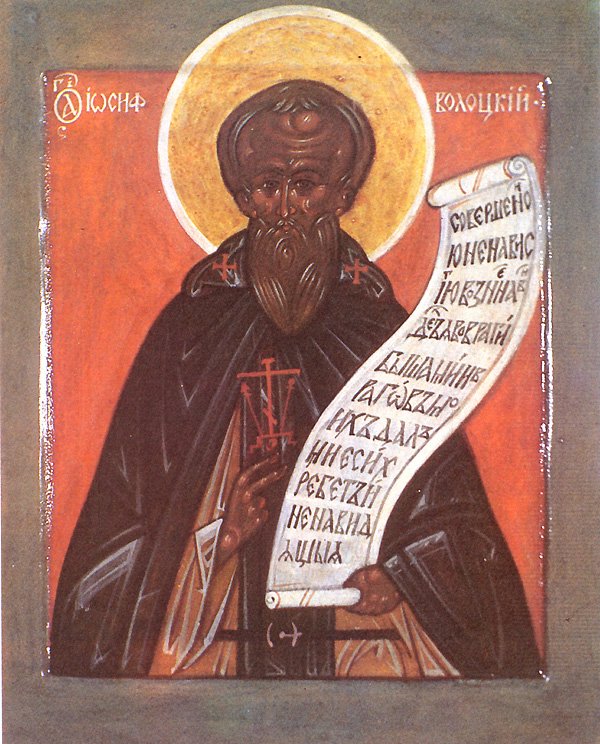
Ven. Joseph of Volotsk
Saint Joseph of Volokolamsk, in the world John Sanin, was born on November 14, 1440 (1439 according to another source) in the village of Yazvisch-Pokrov, not far from the city of Volokolamsk. He was born into a pious family with his father named John (in monasticism Joannicius) and his mother Marina (in schema Maria).
Saint Joseph of Volokolamsk, in the world John Sanin, was born on November 14, 1440 (1439 according to another source) in the village of Yazvisch-Pokrov, not far from the city of Volokolamsk. He was born into a pious family with his father named John (in monasticism Joannicius) and his mother Marina (in schema Maria). The seven-year-old boy John was sent to the pious and enlightened Elder Arsenius of the Volokolamsk-Exaltation of the Cross monastery to be educated.
Distinguished by rare qualities and extraordinary aptitude for church service, for one year the talented youth studied the Psalter, and, the following year, the entire Holy Scripture. He became a reader and singer in the monastery church. Contemporaries were astonished at his exceptional memory. Often, without having a single book in his cell, he would do the monastic rule, reciting from memory from the Psalter, the Gospel, the Epistles, and all that was required.
Even before becoming a monk, John lived a monastic lifestyle. Thanks to his reading and studying of Holy Scripture and the works of the holy Fathers, he dwelt constantly in contemplation of God. As his biographer notes, he “disdained obscene and blasphemous talk and endless mirth from his childhood years.”
At twenty years of age John chose the path of monastic striving and, leaving his parents’ home, he went off into the wilderness nigh to the Tver Savvin monastery, to the renowned Elder and strict ascetic, Barsanuphius. But the monastic rule seemed insufficiently strict to the young ascetic. With the blessing of Elder Barsanuphius, he set off to Borov to Saint Paphnutius of Borov (May 1), who had been a novice of Elder Nikḗtas of the Vysotsk monastery, who in turn was a disciple of Saint Sergius of Radonezh and Athanasius of Vysotsk.
The simple life of the holy Elder, the tasks which he shared with the brethren, and the strict fulfilling of the monastic rule suited John’s spiritual state. Saint Paphnutius lovingly accepted the young ascetic who had come to him, and on February 13, 1460 he tonsured him into monasticism with the name Joseph, thus realizing John’s greatest wish. With love and with zeal the young monk shouldered the heavy obediences imposed upon him, in the kitchen, the bakery, the infirmary. Saint Joseph fulfilled this latter obedience with special care, “giving food and drink to the sick, taking up and arranging the bedding, so very anxious and concerned with everything, working, as though attending to Christ Himself.”
The great spiritual abilities of the young monk were evidenced in the Church reading and singing. He was musically talented and possessed a voice that “in church singing and reading was like that of a swallow and wondrously harmonious, delighting the hearing of listeners, as much as anyone anywhere.” Saint Paphnutius made Joseph ecclesiarch in church, so that he would observe the fulfilling of the Church rule.
Joseph spent about seventeen years in the monastery of Saint Paphnutius. The strict efforts of monastic obedience under the direct guidance of the experienced abbot was for him an excellent spiritual schooling, having educated him into a future instructor and guide of monastic life. Towards the end of the life of Saint Paphnutius, Joseph was ordained hieromonk and, in accord with the final wishes of Saint Paphnutius, he was appointed Igumen of the Borov monastery.
Saint Joseph decided to transform the monastic life along strictly coenobitic principles, following the example of the Kiev Caves, Trinity-Saint Sergius, and Saint Cyril of White Lake monasteries. But this met with strong opposition from a majority of the brethren. Only seven pious monks were of one mind with the igumen. Saint Joseph decided to visit Russian coenobitic monasteries, to investigate the best arrangement for monastic life. He arrived together with the Elder Gerasimus at the Saint Cyril of White Lake monastery, which itself presented a model of strict asceticism on the principles of a coenobitic monastery rule.
His acquaintance with the life of these monasteries strengthened Saint Joseph’s views. But, after he returned to Borov monastery at the wish of the prince, Saint Joseph encountered again the former staunch resistance of the brethren to change from their customary rule. Therefore, he resolved to found a new monastery with a strict coenobitic rule, so he took seven like-minded monks to Volokolamsk, his native region, to a forest known to him since childhood.
In Volokolamsk at the time, the prince was Boris Vasilievich, the pious brother of Great Prince Ivan III. Hearing of the virtuous life of the great ascetic Joseph, he gladly received him and allowed him to settle on the outskirts of his principality, at the confluence of the Rivers Struga and Sestra. The selection of this spot was accompanied by a remarkable occurrence: a storm blew down the trees before the eyes of the astonished travelers, as though clearing the place for the future monastery. Here the ascetics set up a cross and built a wooden church in honor of the Dormition of the Mother of God in June 1479, which was consecrated on August 15, 1479. This day and year stand in history as the date of the founding of the monastery of the Dormition of the Most Holy Mother of God as “volok’ lamsk” [“broken-up peninsula”], later named after its founder.
The monastery was built rather quickly. Much of the work in the construction of the monastery was done by the founder himself. “He was skilled in every human craft: he felled trees, carried logs, he chopped and sawed wood.” By day he toiled with everyone at the construction of the monastery, but spent his nights in solitary cell prayer, remembering always that “Desires kill the sluggard, for his hands do not choose to do anything” (Prov 21:25).
Good reports about the new ascetic attracted disciples to him. The number of monks soon increased to a hundred men, and the venerable Joseph strove to be a good example for his monks in everything. Preaching temperance and spiritual sobriety in all things, his external appearance was no different than the others. His simple, cold-weather rags were his constant clothing, and bast shoes (made from bark) served as his footwear.
He was the first one to appear in church, he read and sang in the choir beside the others, he gave instruction and was the last to leave church. At nights the holy igumen walked around the monastery and the cells, safeguarding the peace and prayerful sobriety of the brethren entrusted him by God. If he chanced to hear a frivolous conversation, he rapped on the door and quietly withdrew.
Saint Joseph devoted much attention to the inner ordering of the life of the monks. He himself led a strict cenobitic life in accord with the Rule he compiled, to which all the services and obediences of the monks were subordinated, and it governed their whole life, “whether in their comings or goings, their words or their deeds.” At the core of the rule was total non-covetousness, detachment from one’s own will, and constant work. The brethren possessed everything in common: clothing, footwear, food and other things.
None of the brethren could take anything into their cell without the blessing of the igumen, not even a book or an icon. Part of the trapeza meal of the monks, by general consent, was given away to the poor. Work, prayer, spiritual efforts filled the life of the brethren. The Jesus Prayer never vanished from their lips. Festivity was viewed by Saint Joseph as a chief weapon for demonic seduction. Saint Joseph invariably imposed upon himself quite burdensome obediences. The monastery was occupied with the copying and transcription of Service Books and the writings of the holy Fathers, so that the Volokolamsk book collection soon became one of the finest of Russian monastic libraries.
With each passing year the monastery of Saint Joseph flourished all the more. In the years 1484-1485 a stone church of the Dormition of the Mother of God was built in place of the wooden one. In the Summer of 1485 “artistic masters of the Russian land” painted within it, Dionysius the Iconographer with his sons Vladimir and Theodosius. Saint Joseph’s nephews, Dositheus and Bassian Toporkov, participated in the adornment of the new Church. In 1504 a heated church in honor of the Holy Theophany was set up, followed by the establishment of a bell-tower and next to the bell tower, a church named in honor of the Hodēgḗtria (Directress)Icon of the Most Holy Theotokos.
Saint Joseph trained a whole school of renowned monks, some of whom gained notoriety in the arena of church-historical activity since they were “good pastors,” while others gained fame with works of enlightenment. Some were remembered as worthy examples of pious monastic struggles. History has preserved for us the names of many disciples and co-ascetics of the holy Volokolamsk igumen, who continued to develop his ideas.
Among the disciples and followers of Saint Joseph were: the Metropolitans of Moscow and All Rus: Daniel (+ 1539) and Macarius (+1563); the Archbishop of Rostov Bassian (+1515); the Bishops of Suzdal: Simeon (+1515), Dositheus of Krutitsa (+1544), and Savva of Krutitsa (called the Black). The activity and influence of Saint Joseph were not limited to the monastery. Many laypeople went to him to receive advice. With a pure spiritual insight he penetrated into the deep secrets of the souls of questioners and clairvoyantly revealed to them the will of God. Everyone living around the monastery considered him their spiritual Father and protector. Eminent nobles and princes asked him to be godfather for their children. They revealed their souls to him in confession, they asked for letters of guidance to help them fulfill his directives.
The common folk found at the monastery the means for sustaining their existence on occasions of extreme need. The number of those fed through monastery resources sometimes approached 700 people. “All of the Volotsk land are inclined to good, enjoying peace and quiet. And the name Joseph, as something sacred, is on everyone’s lips.”
The monastery was famed not only for its piety and help for the suffering, but also for its manifestations of the grace of God. During Matins of Holy Saturday, the righteous monk Bessarion once saw the Holy Spirit in the form of a white dove, sitting upon the Shroud of the Lord, which was being carried by Saint Joseph. The Abbot, bidding the monk to keep silent about the vision, himself rejoiced in spirit, hoping that God would not forsake the monastery. This monk had seen the souls of dying brethren, white as snow, issuing forth from their mouths. To Saint Joseph himself was revealed the day of his end, and he fell asleep in the Lord with joy, having received the Holy Mysteries and assuming the schema.
The saintly life of Saint Joseph was neither easy nor placid. In these difficult times for the Church in Russia, the Lord raised him up as a zealous defender of Orthodoxy in the struggle with heresies and churchly disputes. Saint Joseph exerted quite a great effort in denouncing the Judaizers, who tried to poison and distort the foundations of Russian spiritual life. Just as the holy Fathers and teachers of the Ecumenical Councils had elaborated on the teachings of Orthodoxy in responding to the ancient heresies (which contended against the Spirit, Christ, or icons), so also Saint Joseph was summoned forth by God to oppose the false teachings of the Judaizers and to compile the first manual of Russian Orthodox theology, his large book The Enlightener.
Even earlier, preachers from the Khozars had come to Saint Vladimir (July 15), trying to convert him to Judaism. But the great Baptizer of Rus repudiated the pretensions of the rabbis. After this, Saint Joseph writes, “the Great Russian land dwelt for five centuries in the Orthodox Faith, until the Enemy of salvation the devil, should bring the cunning Jew to the city of Novgorod.”
Along with the retinue of the Lithuanian prince Michael Olelkovich, who came to Novgorod in 1470, the Jewish preacher Skhariya (Zachariah) accompanied them. Playing upon the deficiencies of faith and of learning on the part of certain clergy, Skhariya and his accomplices sowed distrust among the petty-minded towards the church hierarchy, inclining them towards a revolt against the spiritual authorities, tempting them with the idea of “self-authority,” i.e. a capricious self-determination of each individual in matters of faith and salvation. Those they tempted gradually pushed towards a full break with the Church: they disdained the holy icons, and repudiated the veneration of the saints, basic elements of Orthodox popular morality.
Ultimately, they led the religiously blind and deluded to a denial of the saving Mysteries and the fundamental teachings of Orthodoxy, outside of which there is no knowledge of God: the teaching of the Most Holy Trinity and the teaching of the Incarnation of the God-man our Lord Jesus Christ. If decisive measures were not taken, “all of Orthodox Christianity would be doomed by heretical teachings.” So the question was posed for history. The Great Prince Ivan III, enticed by the Judaizers, invited them to Moscow. He had two of the most prominent of the heretics made archpriests, one at the Dormition, the other at the Archangel Michael cathedrals of the Kremlin, and he summoned to Moscow even the arch-heretic Skhariya himself.
All those close to the prince were led astray by the heresy, beginning with the clerk heading the government, Theodore Kuritsyn, whose brother became a ringleader of the heretics. Even the in-law of the great prince, Elena Voloshanka, accepted the Judaizers. And finally, the heretical Metropolitan Zosimas was installed upon the bishop’s Throne of the great Moscow Hierarchs Peter, Alexis and Jonah.
Saint Joseph and Saint Gennadius, Bishop of Novgorod (December 4), called for a struggle against the spread of the heresy. Saint Joseph wrote his first epistle “Concerning the Mystery of the Most Holy Trinity” while still a monk at the Paphnutiev Borov monastery in the year 1477. From the very beginning the Dormition Volokolamsk monastery became a bulwark of Orthodoxy in the struggle against the heresy. Here Saint Joseph wrote his chief works, The Enlightener, engendered with his fiery anti-heretical epistles, or as the monk himself unassumingly called them, “book exercises.” The works of Saint Joseph and Archbishop Gennadius were crowned with success. In 1494 the heretic Zosimas was deposed from the bishop’s Throne, and in the years 1502-04 the malicious and unrepentant Judaizers, who blasphemed against the Holy Trinity, Christ the Savior, the Most Holy Theotokos and the Church,were condemned at a church council.
Saint Joseph had many other trials and tribulations, but each time the Lord tried him according to the measure of his spiritual strength. The saint angered the Great Prince Ivan III, who only towards the end of his life reconciled with the saint and repented of his former weakness for the Judaizers. The saint also angered the Volotsk appenage prince Theodore, on whose lands Joseph’s monastery was situated. In 1508 the saint suffered wrongful interdiction from Saint Serapion, Archbishop of Novgorod (March 16), with whom, however, he soon reconciled.
In 1503, a Council at Moscow, under the auspices of Saint Joseph and his disciples, adopted a “Conciliar Reply” concerning the indissolubility of church properties, “therefore all church-acquired property is essentially the acquired property of God, pledged, entrusted, and given to God.” The legacy of the canonical works of Igumen Joseph is notably in “The Nomocanon Codex,” a vast codex of canonical rules of the Orthodox Church, begun by Saint Joseph and completed by Metropolitan Macarius.
There are opinions about the differences of outlook and discord between the two great pedagogues of Russian monasticism at the end of the fifteenth and beginning of the sixteenth centuries: Saint Joseph of Volotsk and Saint Nilus of Sora (May 7). In the historical literature these views usually present them as proclaiming two “contrary” currents within Russian spiritual life: external action and inner contemplation. This is profoundly incorrect. Saint Joseph in his Rule synthesized these two aspects of the Russian monastic tradition, proceeding without interruption from the Athonite blessing given to Saint Anthony of the Kiev Caves, through Saint Sergius, and down to our own day.
The Rule presupposes the need for a full inner regeneration of man, submitting one’s whole life to the task of salvation and deification [Greek theosis] not only for each individual monk, but also for the collective salvation of the whole human race. A great emphasis in the Rule is put on the demand to monastics for constant work in connection with inward and churchly prayer, “the monk should never be on holiday.” Work, as “a collective deed,” comprised for Joseph the very essence of church life: faith, embodied in good works, is the realization of prayer.
On the other hand, Saint Nilus of Sora had lived the ascetic life for a number of years on Mt. Athos, and he brought from there the teaching about the contemplative life and “the Jesus Prayer” as a means of a hesychastic service of monks to the world, as a constant spiritual activity, in connection with the physical work necessary for sustaining one’s life.
But spiritual work and physical work are but two aspects of the same Christian vocation: a vital continuation of the creative activity of God in the world, encompassing as much the ideal as well as the material spheres. In this regard Saints Joseph and Nilus are spiritual brothers, varied in continuing the Church Tradition of the holy Fathers, and are heirs to the precepts of Saint Sergius of Radonezh. Saint Joseph highly regarded the spiritual experience of Saint Nilus and sent his own disciples to him to study inner prayer.
Saint Joseph was also an active proponent of a strong centralized Moscow realm. He was one of the originators of the teaching about the Russian Church as the recipient and bearer of the piety of the Byzantine Empire, “the Russian land has now surpassed all in piety.” The ideas of Saint Joseph, possessing tremendous historical significance, were further developed later by his disciples and followers. From them came the Pskov Spaso-Eleazarov monastery Elder Philotheus with his own teaching about Moscow as the Third Rome. He declared, “Two Romes have fallen, Moscow is the third, and a fourth there shall not be.”
These views of the Josephites on the significance of monasteries possessing properties for church building, and the participation of the Church in social life, were set amidst the conditions of the struggle for centralized power by the Moscow prince. His opponents were separatists who tried to disparage these views for their own political ends, surreptitiously using the teaching of Saint Nilus of Sora about “non-acquisitiveness,” the withdrawal of monastics from worldly matters and possessions.
This supposed opposition engendered a false view on the hostility between the trends of Saints Joseph and Nilus. In actuality, both trends legitimately coexisted within the Russian monastic Tradition, complementing each other. As is evidenced from the Rule of Saint Joseph, its basis was complete non-acquisitiveness, and renunciation of the very concepts of “yours-mine.”
The years passed. The monastery flourished with the construction work and efforts of Saint Joseph, and as he got old, he prepared himself for life eternal. Before his end he received the Holy Mysteries, then summoned all the brethren. He gave them his peace and blessing, and peacefully fell asleep in the Lord on September 9, 1515.
The funeral oration to Saint Joseph was composed by his nephew and disciple, the monk Dositheus Toporkov.
The first Life of the saint was written in the 1540s by a disciple of Saint Joseph, Bishop Savva the Black of Krutitsa, with the blessing of Macarius, Metropolitan of Moscow and all Rus (+ 1564). It entered into the Great MENAION Readings compiled by Macarius. A second redaction of the Life was written by the Russified Bulgarian writer Lev the Philolog with the assistance of Saint Zenobius of Otensk (October 30).
Local celebration of Saint Joseph was established at the Volokolamsk monastery in December of 1578, on the hundred year anniversary of the founding of the monastery. On June 1, 1591, the church-wide celebration of his memory was established under Patriarch Job. Saint Job, a disciple of the Volokolamsk saint, tonsured Saint Germanus of Kazan, and was a great admirer of Saint Joseph and was author of the Service to him, which was included in the MENAION. Another disciple of Saints Germanus and Barsanuphius was also the companion and successor to Patriarch Job, the Hieromartyr Patriarch Hermogenes (February 17), a spiritual leader of the Russian people in the struggle for liberation under the Polish incursion.
The theological works of Saint Joseph comprise an undeniable contribution within the treasury of the Orthodox Tradition. As with all Church writings inspired by the grace of the Holy Spirit, they continue to be a source of spiritual life and knowledge, and they have their own theological significance and pertinence.
Saint Joseph’s chief book was written in sections. Its original form, completed at the time of the 1503-1504 councils, included eleven sections. In the final redaction, compiled after the death of the saint and involving a tremendous quantity of scrolls, The Book against the Heretics or The Enlightener includes sixteen sections, prefaced by An Account of the Newly-Appeared Heresies. The first section expounds the Church teaching about the teaching of the Most Holy Trinity; the second, about Jesus Christ, the True Messiah; the third, about the significance within the Church of the prophecies of the Old Testament; the fourth, about the Incarnation of God; the fifth through seventh, about the veneration of icons. In the eighth through tenth sections, Saint Joseph expounds on the fundamentals of Christian eschatology. The eleventh section is devoted to monasticism. In the twelfth the ineffectiveness of the anathemas and sanctions imposed by heretics is demonstrated. The final four sections consider methods of the Church’s struggle with the heretics, and the means for their correction and repentance.
Saint Joseph is also commemorated on September 9 and February 13.
Troparion - Tone 5
Let all the faithful who have gathered here praise the adornment of fasters and glory of the Fathers, / an alms-giver, a light of wisdom, a teacher of meekness, / who put heresies to shame, and the star of Russia, / the most wise Joseph, / who entreats the Lord to have mercy on our souls.
Kontakion - Tone 8
Regarding the storms of life, the vanity of the world, and the tumult of the passions as nothing, / you became a dweller in the wilderness, / an instructor of many, a gatherer of monks, a true intercessor, and a lover of purity. / O Venerable Joseph, entreat Christ God that our souls may be saved.
Theophanes the Confessor
Saint Theophanes, Confessor and Faster, was born into a family of pagans. In his youth Theophanes came to believe in Christ, was baptized and secretly left his pagan parents to go to Mount Dabis to an Elder, who had lived there in asceticism for seventy-five years.
The ascetic taught the young man to read the Scriptures, and instructed him in the rules of monastic life.
Saint Theophanes, Confessor and Faster, was born into a family of pagans. In his youth Theophanes came to believe in Christ, was baptized and secretly left his pagan parents to go to Mount Dabis to an Elder, who had lived there in asceticism for seventy-five years.
The ascetic taught the young man to read the Scriptures, and instructed him in the rules of monastic life. Five years later the Elder died, and Saint Theophanes spent the next 58 years in his cave in solitude. Then he came down from the mountain and began to preach Christ among the pagans, and he converted many to Christianity.
By order of the Roman emperors Carlus (282-283) and his sons Numerian and Carlinus (283-284), Saint Theophanes was seized and subjected to torture. The holy confessor bravely endured his sufferings and was released alive. Having returned to the mountain, Saint Theophanes lived there for another seventeen years and died in peace.
Troparion - Tone 8
Champion of Orthodoxy, teacher of purity and of true worship, / the enlightener of the universe and the adornment of hierarchs: / all-wise father Theophanes, your teachings have gleamed with light upon all things. / Intercede before Christ God to save our souls.
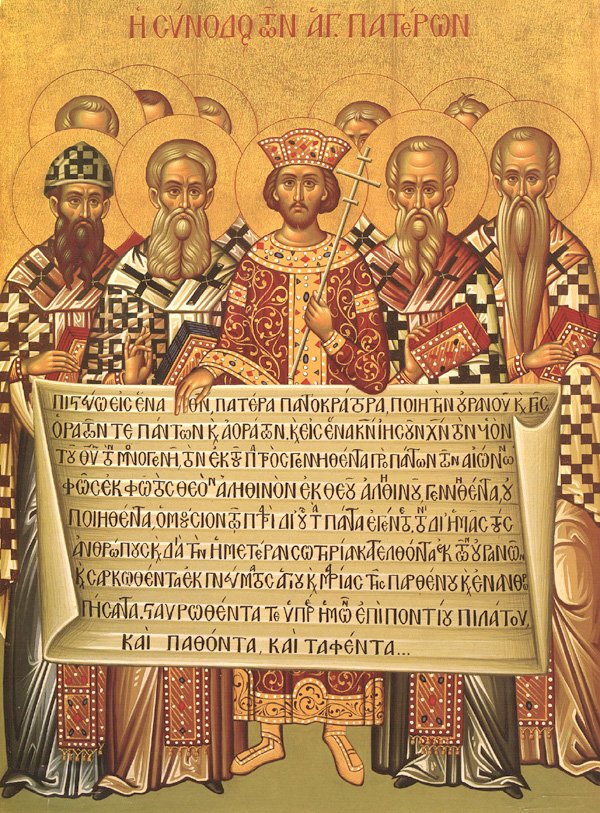
Commemoration of the Third Ecumenical Council (431)
The Third Ecumenical Council was convened in the year 431 in the city of Ephesus (Asia Minor) during the reign of the emperor Theodosius the Younger (408-450). The Council was convened to investigate without further delay, the false teachings of Patriarch Nestorius of Constantinople (428-431).
Contrary to the dogmas of the Ecumenical Church, Nestorius dared to assert that the Son of God Jesus Christ is not one Person (Hypostasis), as Holy Church teaches, but is rather two distinct persons, one Divine, and the other human.
Regarding the Most Holy Theotokos, he impiously asserted that She should not be called the Mother of God, but rather only the mother of the man Christ. The heresy of Nestorius is opposed to one of the basic dogmas of the Christian Faith: our Lord Jesus Christ’s divine and human natures.
According to the false teaching of Nestorius, Jesus Christ was born as an ordinary man, and afterwards because of His sanctity of life, He was somehow joined to the Godhead. With this blasphemous teaching of Nestorius the Enemy of the race of man, the devil, attempted to undermine the Christian Faith on these points: that the Pre-eternal God the Word, the Son of God, actually was incarnate in the flesh of the All-Pure Theotokos. Having become Man, He thereby redeemed the human race from slavery to sin and death by His own suffering and death, and by His glorious Resurrection He trampled down Hades and death and opened the path to the Kingdom of Heaven to those who believed in Him, and to those striving to live according to His commandments.
A long while before the convening of the Ecumenical Council, Saint Cyril, Archbishop of Alexandria, repeatedly tried to reason with the heretic Nestorius. Saint Cyril in his letters explained the mistakes of judgment by Nestorius, but Nestorius stubbornly continued with his teachings.
Saint Cyril wrote about the danger of the rising heresy to Celestine, the Pope of Rome, and to other Orthodox bishops, who also attempted to reason with Nestorius. When it became clear that Nestorius would continue with his teachings and that they were becoming widespread, the Orthodox bishops appealed to the emperor Theodosius the Younger for permission to convene an Ecumenical Council. The Council was convened on the day of the Most Holy Trinity, June 7, 431.
Two hundred bishops attended the Council. Nestorius also arrived in Ephesus, but he did not appear at the Council even though the Fathers suggested three times that he attend the sessions. Then the Fathers began to discuss the heresy in the absence of the heretic.
The sessions of the Council continued from June 22 to August 31. At the Council of Ephesus were present such famous Fathers of the Church as Saint Cyril of Alexandria, Juvenal of Jerusalem, Memnon of Ephesus (Saint Celestine, Pope of Rome, was unable to attend because of illness, but he sent papal legates).
The Third Ecumenical Council condemned the heresy of Nestorius and confirmed the Orthodox teaching on these matters: that it is necessary to confess the Lord Jesus Christ as One Person (Hypostasis) in two natures, the Divine and the Human, and that the All-Pure Mother of the Lord be acclaimed as Ever-Virgin and truly the Theotokos. In the guidance of the Church the holy Fathers issued eight Canons, and the “Twelve Anathemas against Nestorius” by Saint Cyril of Alexandria.
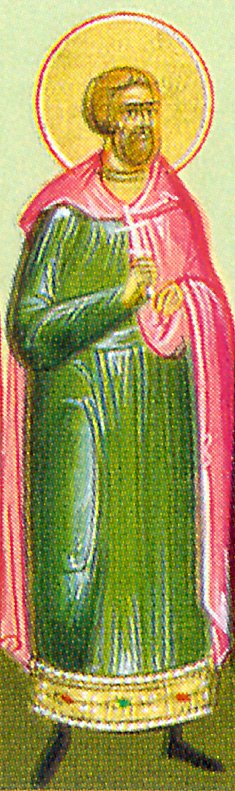
Holy Martyr Severian of Sebaste (320)
The Holy Martyr Severian (+ 320) suffered for Christ in Armenian Sebaste during the governorship of Licius, when Christians were persecuted under the emperor Licinius. Even before his martyr’s deed, Saint Severian had shown sincere compassion for 40 Christian soldiers, suffering for confessing the Name of Christ. H
The Holy Martyr Severian (+ 320) suffered for Christ in Armenian Sebaste during the governorship of Licius, when Christians were persecuted under the emperor Licinius. Even before his martyr’s deed, Saint Severian had shown sincere compassion for 40 Christian soldiers, suffering for confessing the Name of Christ. He visited the captives in prison, raised their spirits, and appealed to their valor and stoic strength. These martyrs met their death at Lake Sebaste (March 9).
Half a year later, Severian was also brought to trial for confessing the Christian Faith, and he was subjected to cruel tortures. Deeply devoted to the will of God, Saint Severian called out to the Lord during his torment, imploring Him for the strength to endure the suffering and to complete his deed of martyrdom.
After intense torture, and unbroken in his faith, the holy martyr was suspended from the city wall with one stone chained around his neck, and another chained to his feet, and so he died. His body was carried by Christians of Sebaste to his home, where the local inhabitants thronged to take their leave of him and to ask for his holy prayers. Amidst all this a dead man who had not yet been buried arose, a servant of Saint Severian, who got up from his deathbed to follow his master’s final path. He continued to live another fifteen years, never leaving the burial place of the holy martyr.
Troparion - Tone 3
Your holy martyr Severian, O Lord, / through his sufferings has received an incorruptible crown from You, our God. / For having Your strength, he laid low his adversaries, / and shattered the powerless boldness of demons. / Through his intercessions, save our souls!
Kontakion - Tone 2
You appeared as a bright star announcing Christ with your radiance, / which is repulsive to this world, O Martyr Severian; / extinguishing the allure of false gods, / you enlighten the faithful, / always interceding for us all.
Our Holy Father Ciaran of Clonmacnoise (549)
Saint Ciaran (Kieran), who has been described as a lamp shining with the light of knowledge, was born in 512 and raised in Connacht, Ireland. His father was a builder of chariots. He was one of eight children, at least two of whom also embraced the religious life.
Saint Ciaran had a special affinity for animals, and even had a fox for a pet.
Saint Ciaran (Kieran), who has been described as a lamp shining with the light of knowledge, was born in 512 and raised in Connacht, Ireland. His father was a builder of chariots. He was one of eight children, at least two of whom also embraced the religious life.
Saint Ciaran had a special affinity for animals, and even had a fox for a pet. The future saint left home as a boy, driving a cow before him to pay for his keep. He went to study with Saint Finnian of Clonard (December 12), and became one of the “twelve apostles to Ireland.” Some of the others were Saint Columba of Iona (June 9), Ninnidh (Nennius) of Lough Erne (January 16), and Saint Brendan the Voyager (May 16).
There is a story that one day the students were studying the Gospel of Saint Matthew when Saint Ninnidh came into class without a book. He asked Ciaran to lend him his, which he did. So when Finnian tested the class, Ciaran knew only the first half of the Gospel. The other students laughed and called him “Ciaran half-Matthew.” Saint Finnian silenced them and said, “Not Ciaran half-Matthew, but Ciaran half-Ireland, for he will have half the country and the rest of us will have the other half.”
After spending some time in Clonard, Ciaran visited other monasteries, including that of Saint Enda (March 21) on Aran, where he was ordained to the holy priesthood. He left there because of a vision which Saint Enda interpreted for him. Then he went to Scattery Island to study under Saint Senan (March 8). Later, he went to visit his brothers Luachaill and Odhran, who had a foundation at a place called Isel. Ciaran’s charity was so great that his brothers asked him to leave. They said, “Brother, leave us for we cannot live in the same place with you and feed and keep our brethren for God, because of your unbounded lavishness.”
Saint Ciaran left them and set off with his books in a bag. On the way he met a stag and placed the bag on its back. He followed the animal until he came to Lough Ree opposite Hare Island, where he founded a monastery. Leaving his brother Donnan (January 7) as abbot, he went to dwell in the wilderness.
With nine other companions, Saint Ciaran founded another monastery at Clonmacnoise on the banks of the River Shannon. Within seven months, he became ill and asked to be taken outside and laid on the ground. He looked up at the heavens and said something about the way being steep and difficult. He departed to the Lord at the age of thirty-three.
Clonmacnoise was a thousand years old when it was suppressed by Henry VIII. The monastery was destroyed by Reformation armies in 1552, but the ruins are still very impressive. There is a cathedral, seven other churches, three high crosses, and two stumps of round towers. Fifty kings are said to be buried here with the abbots and monks of the monastery.
Saint Ciaran’s crozier survives to the present day.
Troparion - Tone 8
By a flood of tears you made the desert fertile, / and your longing for God brought forth fruits in abundance. / By the radiance of miracles you illumined the whole universe! / O our holy father Ciaran, pray to Christ our God to save our souls!
Scripture Readings
☩Epistle
2 Corinthians 7:1-10
1
Having therefore these promises, dearly beloved, let us cleanse ourselves from all filthiness of the flesh and spirit, perfecting holiness in the fear of God.
2
Receive us; we have wronged no man, we have corrupted no man, we have defrauded no man.
3
I speak not this to condemn you: for I have said before, that ye are in our hearts to die and live with you.
4
Great is my boldness of speech toward you, great is my glorying of you: I am filled with comfort, I am exceeding joyful in all our tribulation.
5
For, when we were come into Macedonia, our flesh had no rest, but we were troubled on every side; without were fightings, within were fears.
6
Nevertheless God, that comforteth those that are cast down, comforted us by the coming of Titus;
7
And not by his coming only, but by the consolation wherewith he was comforted in you, when he told us your earnest desire, your mourning, your fervent mind toward me; so that I rejoiced the more.
8
For though I made you sorry with a letter, I do not repent, though I did repent: for I perceive that the same epistle hath made you sorry, though it were but for a season.
9
Now I rejoice, not that ye were made sorry, but that ye sorrowed to repentance: for ye were made sorry after a godly manner, that ye might receive damage by us in nothing.
10
For godly sorrow worketh repentance to salvation not to be repented of: but the sorrow of the world worketh death.
☩Gospel
Mark 1:29-35
29
And forthwith, when they were come out of the synagogue, they entered into the house of Simon and Andrew, with James and John.
30
But Simon’s wife’s mother lay sick of a fever, and anon they tell him of her.
31
And he came and took her by the hand, and lifted her up; and immediately the fever left her, and she ministered unto them.
32
And at even, when the sun did set, they brought unto him all that were diseased, and them that were possessed with devils.
33
And all the city was gathered together at the door.
34
And he healed many that were sick of divers diseases, and cast out many devils; and suffered not the devils to speak, because they knew him.
35
And in the morning, rising up a great while before day, he went out, and departed into a solitary place, and there prayed.
Liturgical data sourced from OCA.org and orthocal.info